Blood Flow Restriction
BFR Cuffs for Muscle Building After Surgery: How to Keep Strength Through the Rehab Window
Post-surgical muscle loss is one of the biggest setbacks in recovery. BFR cuffs allow strength work at twenty to thirty percent of max load, without driving force through the repair.
Start Feeling Better Today
Stop managing pain. Start hunting the cause.
$99 · No Referral Needed
The guide · 9
- 01Quick Answer
- 02Why Post-Surgical Muscle Loss Is the Real Setback
- 03How BFR Cuffs Solve the Problem
- 04The Kinetic Chain Argument for BFR After Surgery
- 05How Thera Performance Lab Uses BFR for Surgical Recovery
- 06When BFR Can Start After Surgery
- 07FAQs
- 08Recovering From Surgery? Start the Strength Side Earlier.
- 09Ready to find the root cause?
The first six weeks after most major surgeries are the most underutilized window in modern rehab. The surgical repair is healing. Heavy loading is contraindicated. So the standard plan is to wait. And while that waiting happens, the muscle around the repair quietly disappears. By the time the patient is cleared to start "real" strength work, three to six weeks of progressive muscle loss have stacked up. The original injury is not the only thing that needs rebuilding anymore.
Blood flow restriction cuffs change that math. Here is how, and how Thera Performance Lab uses them inside surgical recovery plans.
Quick Answer
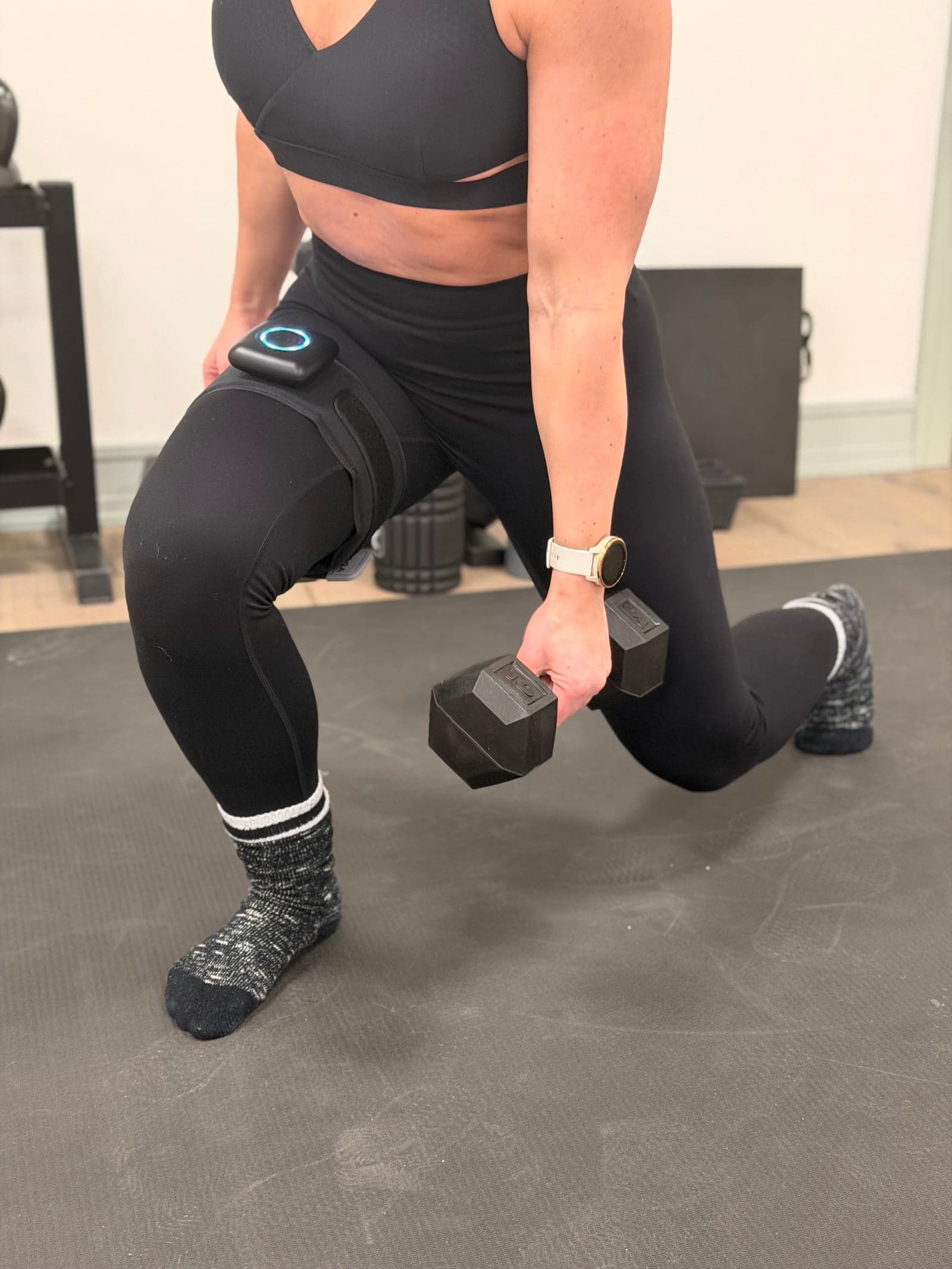
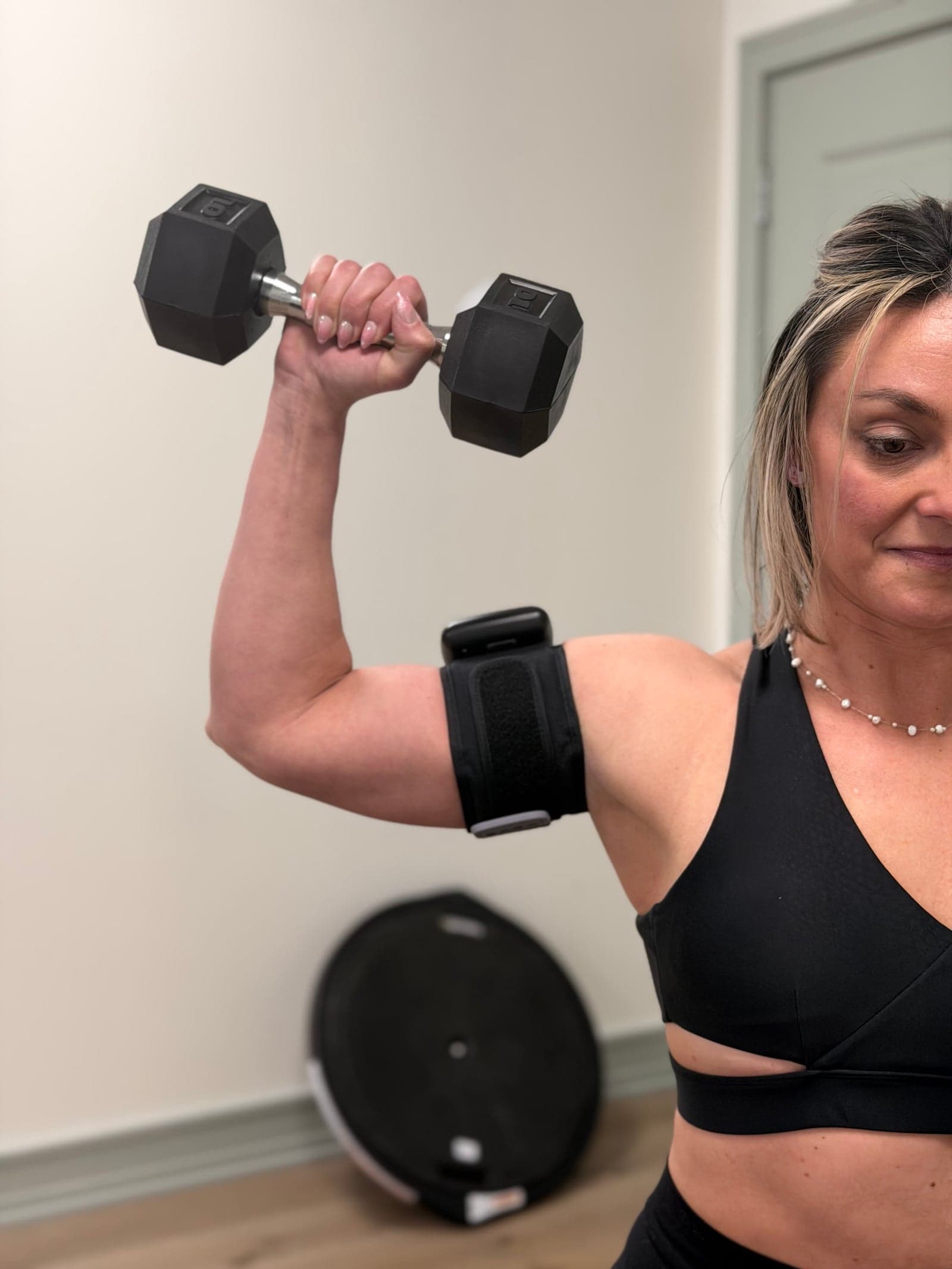
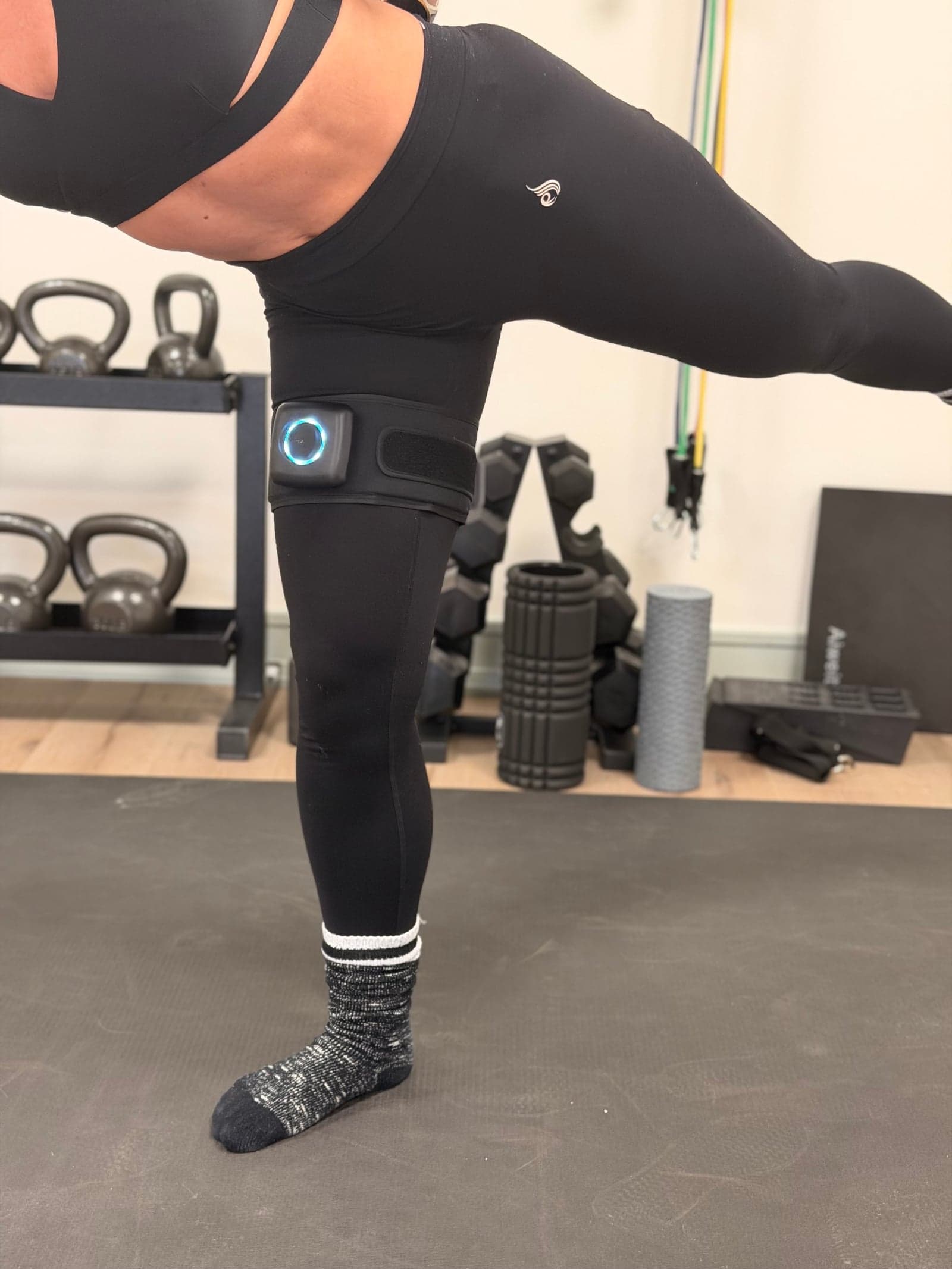
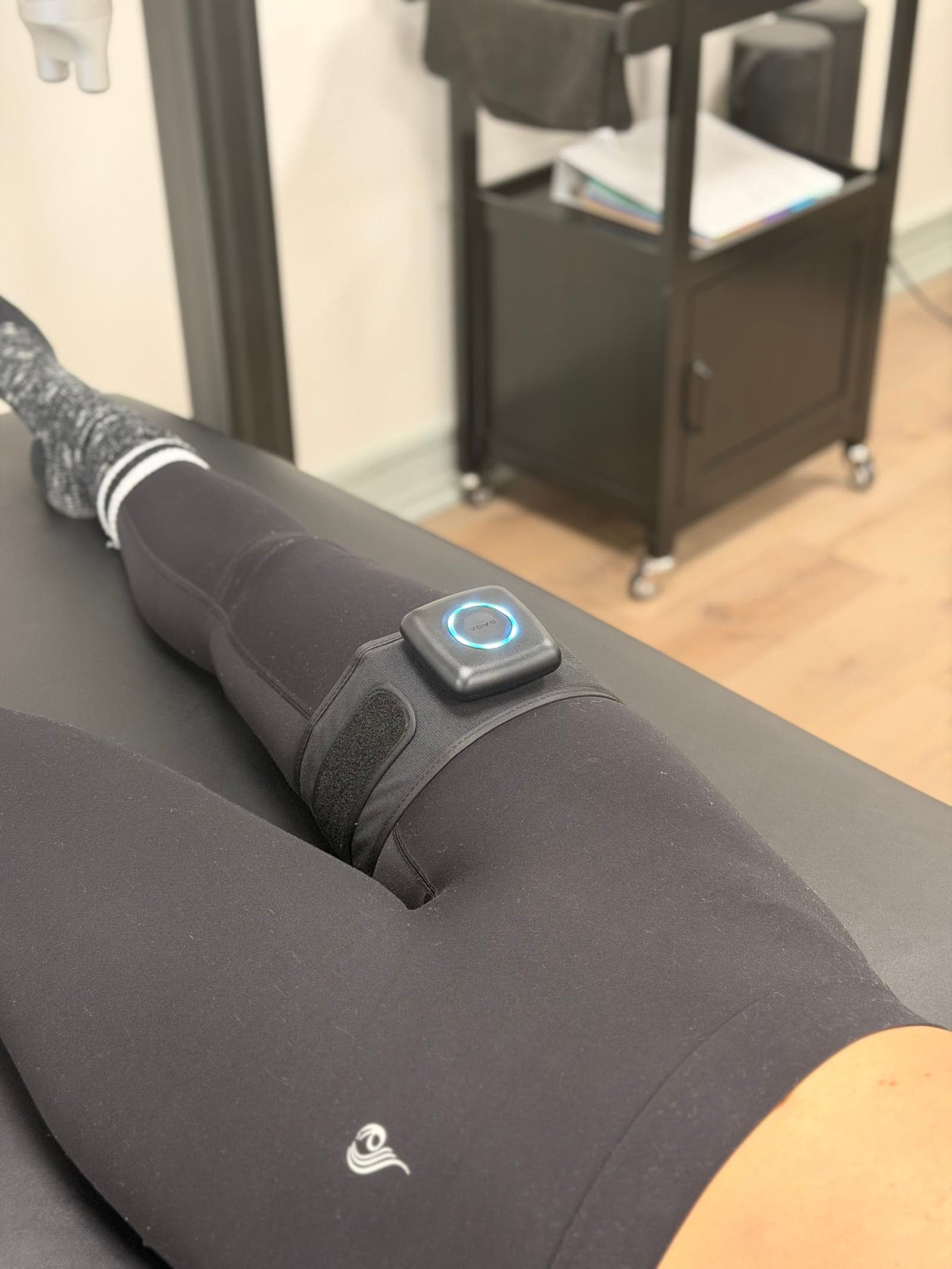
BFR cuffs allow strength and muscle-building work at twenty to thirty percent of one-rep max while still triggering the same hypertrophy and strength signals the body produces under heavy load. For a post-surgical patient, this means measurable strength work can begin in the early phase of recovery, before the repair can tolerate normal loading. At Thera Performance Lab, blood flow restriction therapy is administered by your Doctor of Physical Therapy during one-on-one sessions using professional-grade SAGA BFR Cuffs as part of a complete kinetic chain treatment plan.
Why Post-Surgical Muscle Loss Is the Real Setback
Most people preparing for a major surgery think about the surgery itself. The repair, the anesthesia, the immediate recovery. What is harder to see in advance is what happens to the muscle around the joint during the weeks it spends in a brace, a sling, or a non-weight-bearing phase.
The numbers are worse than most patients expect. Peer-reviewed studies on ACL repair patients show quadriceps cross-sectional area drops by as much as 20 to 30 percent in the first six weeks post-surgery without targeted intervention. Similar losses show up in the deltoid and rotator cuff musculature after shoulder reconstructions. In the calf and surrounding chain after Achilles repair.
That lost muscle does not come back on its own when the brace comes off. It has to be rebuilt with months of progressive loading after clearance, which extends the total recovery window by anywhere from one to three additional months.
The second problem, the deconditioning problem, ends up being a bigger contributor to long delays than the surgical site itself.
How BFR Cuffs Solve the Problem
BFR works by using a pneumatic cuff placed on the limb proximal to the muscle being trained. The cuff is inflated to a specific percentage of the patient's full occlusion pressure. Arterial blood flow into the muscle is preserved. Venous return is partially restricted.
The result is a metabolic environment inside the working muscle that mimics heavy training. Lactate accumulates. Growth hormone signaling spikes. Type II muscle fibers, the high-threshold motor units that normally only fire under heavy load, get recruited even though the actual load is light.
For a post-surgical patient, the load math is the key. Twenty to thirty percent of one-rep max is well below the threshold that would stress most surgical repairs. The training stimulus delivered, however, is in the same neighborhood as eighty percent of one-rep max. Muscle gets built. Strength gets maintained or improved. The surgical repair never sees the heavy load that would otherwise cause it.
The Kinetic Chain Argument for BFR After Surgery
Surgery rarely affects only the structure being repaired. A knee surgery deconditions the quad, the hamstring, the calf, and through cascade effects the hip and the opposite leg. A shoulder surgery deconditions not just the rotator cuff but the scapular stabilizers, the thoracic rotators, and the contralateral arm that has been picking up the slack.
This is why a kinetic chain assessment is the right entry point for post-surgical rehab. The injury is localized. The deconditioning is not.
BFR fits this framework because it can be applied to any segment of the chain that needs to keep training while the repair is offline. Quad work without loading the knee. Hamstring work that does not pull on the surgical site. Deltoid work at a fraction of the normal load. Opposite-limb training that prevents asymmetry.
Used inside a kinetic chain treatment plan, BFR is not a single intervention. It is a way to keep the entire chain trained while one link recovers, so the patient does not finish rehab with a strong repair and a weak everything-else.
How Thera Performance Lab Uses BFR for Surgical Recovery
At TPL, BFR is administered in-clinic by your Doctor of Physical Therapy. We use SAGA BFR Cuffs, built by Dr. Mike MacPherson, PhD, CSCS, a sport scientist who has spent his career on BFR research and applied performance science.
We chose SAGA specifically because of one feature that matters in a clinical setting. The cuffs are wireless and auto-calibrating. They read the patient's limb size, compute the correct occlusion pressure, and hold it through the set. The clinician does not have to manage a Doppler reading or a pressure gauge. That makes the equipment fast, accurate, and unobtrusive in a treatment session where the clinician is focused on the patient.
A typical post-surgical BFR session at TPL fits inside a longer treatment hour. Your Doctor of Physical Therapy assesses the surgical limb and the unaffected side, places the cuffs on whichever limb the plan calls for, calibrates to your specific occlusion percentage, and runs three to four sets of a chosen exercise at low load. The clinician is in the room the entire time. The cuffs come off, the limb is reassessed, and the rest of the treatment plan continues.
Most surgical clients see BFR work as part of weekly or twice-weekly sessions through the early rehab phase, with progression to higher load training as the surgeon clears it.
When BFR Can Start After Surgery
This varies by procedure and by surgeon, and your Doctor of Physical Therapy will coordinate the protocol with your surgical team.
In general, BFR can begin earlier than most patients expect. Many ACL protocols allow BFR work within one to two weeks post-op for the unaffected limb and within two to four weeks for the surgical limb itself. Shoulder protocols vary more, with rotator cuff and labral repairs typically starting BFR at four to six weeks. Hip arthroscopy and ankle procedures fall in similar ranges.
The right timing always comes from coordination with the surgeon, screening for contraindications, and the specific tissue healing curve of the patient in front of us. There is no template that works for every procedure.
FAQs
Is BFR safe right after surgery?
When applied by a Doctor of Physical Therapy after appropriate medical screening and coordination with your surgeon, BFR has an excellent safety record in early-phase post-surgical rehab. It is contraindicated in some specific conditions, including certain vascular and cardiac considerations, which is why the clinical version always begins with screening.
Will my surgeon approve BFR?
Most modern orthopedic surgeons are familiar with BFR and supportive of its use in post-surgical rehab. Your Doctor of Physical Therapy can communicate directly with your surgical team about the protocol if there are questions or specific timing concerns.
How is clinical BFR different from buying cuffs and doing it myself?
The clinical version is administered by a licensed Doctor of Physical Therapy as part of a treatment plan after a full kinetic chain assessment. Pressure percentages are calibrated to your specific limb and your specific point in the healing curve, exercise selection matches your surgical site and the chain around it, and progression rules are tied to objective reassessment. Self-administered BFR with generic protocols is a different intervention with a different risk profile, especially in the early post-surgical phase.
Can I use the cuffs at home once I am cleared?
Yes. Once your Doctor of Physical Therapy has established the protocol and you are out of the early high-risk phase, many patients continue BFR work at home between sessions or after discharge. SAGA BFR Cuffs are the same cuffs we use in the clinic, so the home protocol mirrors the in-clinic version exactly. Use code THERA at saga.fitness for 10% off if you are a TPL client.
Recovering From Surgery? Start the Strength Side Earlier.
Surgical recovery is not just about waiting for tissue to heal. It is about protecting the muscle and the chain around it while the healing happens, so the recovery curve is not extended by months of unnecessary deconditioning. BFR is the tool that closes that gap, used inside a full kinetic chain treatment plan that addresses the entire body, not just the surgical site.
Book your $99 Complete Kinetic Chain Assessment at Thera Performance Lab in Lake Orion, and find out how the strength side of your surgical recovery should be running in parallel with the healing side, not after it.
Ready to find the root cause?
If you've been working through sports injuries and want a root-cause path forward, this is the work Thera Performance Lab does every day. Sessions run inside our Sports Performance & Recovery track, typically anchored by Blood Flow Restriction Training as one of the precision tools in a personalized kinetic-chain plan.
Book a Complete Kinetic Chain Assessment — $99, no referral needed.