Blood Flow Restriction
BFR Training for Athletes: How Low-Load Strength Work Keeps You Competing
Competitive athletes use blood flow restriction to keep training when heavy load is the problem. How TPL incorporates SAGA BFR Cuffs into sport-specific performance recovery.
Start Feeling Better Today
Stop managing pain. Start hunting the cause.
$99 · No Referral Needed
The guide · 9
- 01Quick Answer
- 02Why Athletes Hit the BFR Inflection Point
- 03How BFR Solves Sport-Specific Strength Problems
- 04The Kinetic Chain Lens for Athletes
- 05How Thera Performance Lab Uses BFR With Athletes
- 06Where BFR Should Not Be the Answer
- 07FAQs
- 08Use BFR as Part of Your Performance Plan
- 09Ready to find the root cause?
The athletes who use BFR are almost never the ones recovering from a recent surgery. They are the ones who train at a level where heavy load is part of the problem. A golfer with a hip that has lost rotation. A jiu-jitsu competitor with a shoulder that complains every time they hit the bag. A runner whose knees do not tolerate back-squat volume anymore. A lifter who has chased PRs into a chronic low-back issue and now cannot deload without losing the gains.
For all of them, BFR is a way to keep building strength while subtracting the load the body can no longer absorb. It is the most underused tool in the performance-recovery toolbox.
Quick Answer
Blood flow restriction training lets competitive athletes build and maintain strength at twenty to thirty percent of one-rep max while preserving the metabolic and recruitment signals that heavy training produces. For sport applications, this means a way to train hard when a joint, a chronic injury, or a recovery curve makes heavy load the problem. At Thera Performance Lab, BFR is administered by your Doctor of Physical Therapy during one-on-one sessions using clinical-grade SAGA BFR Cuffs as part of a sport-specific performance recovery plan.
Why Athletes Hit the BFR Inflection Point
The pattern repeats across sports. An athlete spends years building strength under heavy load. The strength stops being free. Joints accumulate wear. Specific patterns become uncomfortable. The volume that used to be possible becomes a problem the day after.
The conventional response is one of three things. Train through it and hope. Back off the load and lose the gains. Or stop training and try to come back later. None of those preserves the athlete's competitive ceiling.
BFR is a fourth option. Keep the training stimulus that maintains strength. Subtract the load that is no longer the right input.
How BFR Solves Sport-Specific Strength Problems
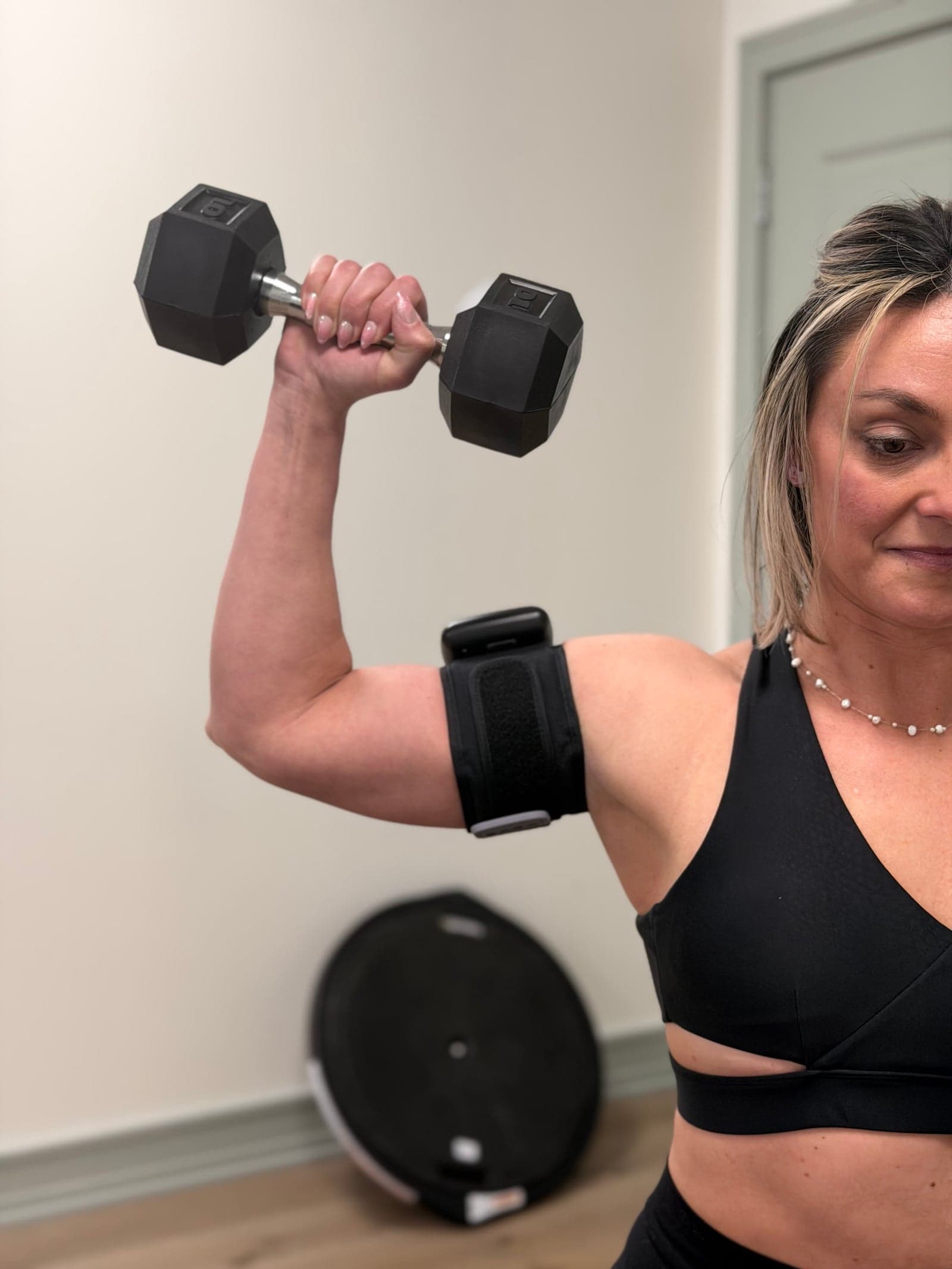
The biology is straightforward. A pressure cuff partially restricts venous return during light-load exercise. The working muscle reaches a state of metabolic stress that the body interprets as heavy training. High-threshold motor units recruit. Hypertrophy and strength signals fire.
For sport applications, this matters in specific ways.
The injured side and the healthy side can train symmetrically. A jiu-jitsu competitor with a left shoulder issue can keep training the right shoulder under heavy load while the left side stays calibrated with BFR. Both sides progress. The asymmetry that would otherwise build up while waiting for the bad shoulder to settle does not happen.
Chronic-load joints get a recovery week without losing strength. A lifter dealing with a cranky lower back can run a deload week of BFR work on the legs and posterior chain at a quarter of normal load. The training stimulus that maintains the muscle is preserved. The joints get the rest they need to settle.
In-season athletes can keep training through fatigue windows. A golfer playing tournament rounds two days in a row cannot afford the muscle damage that comes from heavy lifting the morning before round two. BFR at low load provides a maintenance stimulus that does not interfere with sport performance.
The Kinetic Chain Lens for Athletes
For competitive athletes, BFR is rarely about a single weak link. It is about keeping the chain balanced while one segment de-loads or one joint takes a recovery cycle.
Sport-specific examples make the framework concrete.
Golf. The rotational chain runs from the trail foot up through the hip, the pelvis, the thoracic spine, the lead shoulder, and into the club face. When any link loses range or strength, the chain compensates and a specific part of the body takes the hit. BFR work for the hip rotators, scapular stabilizers, and trail-side glute keeps the chain trained at low joint load when the rotational volume of the season has already loaded those tissues hard.
Brazilian Jiu Jitsu. The grappling chain demands neck, shoulder, hip, and knee strength under rotational and isometric load that conventional sports rarely produce. BFR work for the rotator cuff and scapular stabilizers, the deep hip rotators, and the cervical musculature keeps the support structures around the most-loaded joints trained without piling on top of the volume already coming from the mats.
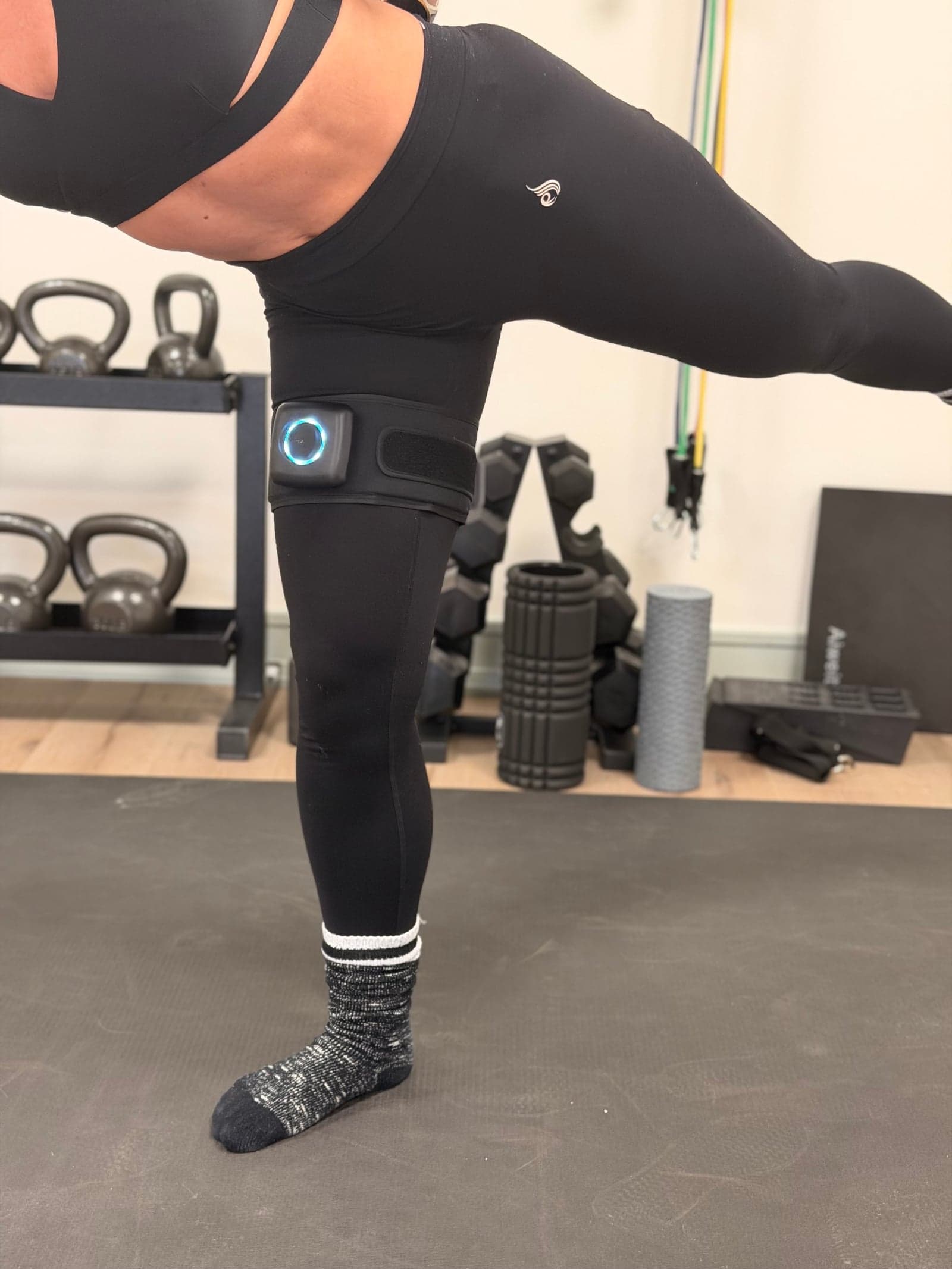
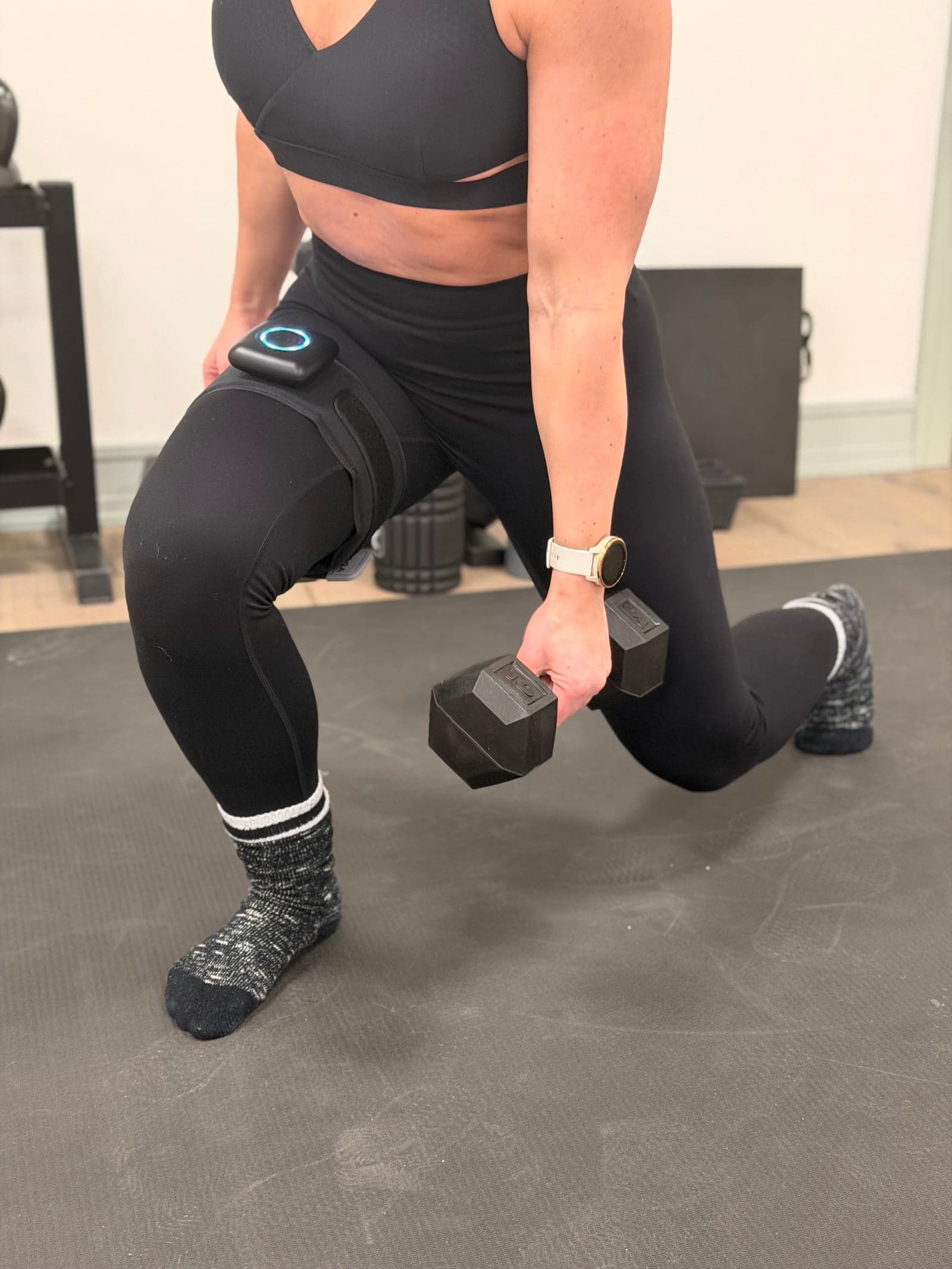
Running. The lower-limb chain wears down across miles. Hip stabilizers, calf and intrinsic foot muscles, and quadriceps. BFR lets the runner train all three at maintenance loads through a high-volume week without the joint stress that would compound an existing knee or ankle issue.
Weightlifting. The strength athlete dealing with a chronic shoulder, low-back, or knee issue can use BFR on a deload week to maintain hypertrophy and recruitment patterns without pressing through the issue. When the heavy training resumes, the muscle is still there.
In every case, the BFR sits inside a sport-specific performance recovery plan built off a full kinetic chain assessment. The point is not that BFR is the answer. The point is that BFR is one of several tools available once the chain has been mapped and the actual problem has been identified.
How Thera Performance Lab Uses BFR With Athletes
The difference between gym BFR and clinical BFR is the difference between guessing at the protocol and running it with a Doctor of Physical Therapy in the room.
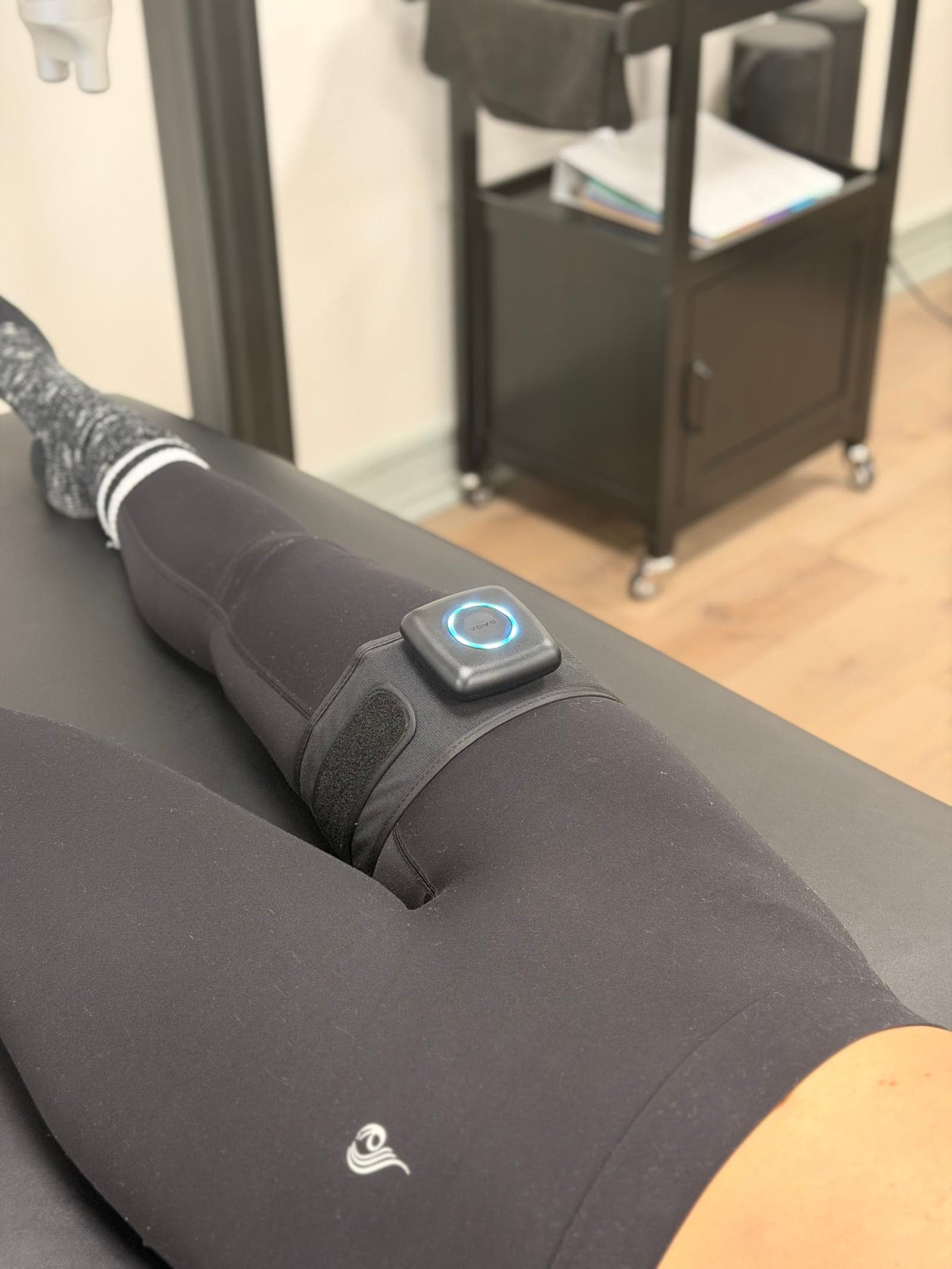
At TPL, BFR is administered in-house during one-on-one sessions. We use SAGA BFR Cuffs, engineered with the input of Dr. Mike MacPherson, PhD, CSCS, a sport scientist whose work focuses on BFR research and applied performance science.
The cuffs are wireless and auto-calibrating. They read the athlete's limb size, compute the right occlusion percentage, and hold it through the set. The therapist does not have to manage the equipment. The athlete gets a session where the clinician's attention is on the movement quality and the protocol, not on a pressure gauge.
A typical session for a competitive athlete looks like this. A kinetic chain assessment establishes the limiting factors and the joints under chronic load. The treatment plan addresses the structural side with hands-on work, the RX2600 robotic precision therapy system, and modalities matched to the issue. BFR sits inside the strength-training portion of the plan, used when the load math calls for it.
For some athletes, that is a weekly session. For others, it is a tool used in specific blocks of the training year. The frequency depends on the sport, the season, and the athlete's specific kinetic chain.
Where BFR Should Not Be the Answer
It is worth being direct about what BFR is not.
It is not a replacement for fixing the underlying problem. If the kinetic chain has a real restriction or a real compensation pattern, training under BFR does not undo it. The structural work has to happen alongside.
It is not a way to train through a serious injury. A torn structure, an active inflammation, or any condition that requires actual rest is not a candidate for BFR loading. Your Doctor of Physical Therapy screens for these before the cuff goes on.
It is not a substitute for the heavy training the sport requires. BFR maintains strength and recruitment. It does not, on its own, build the peak strength that a competitive lifter or thrower needs to express on game day. It is a tool for specific phases and specific problems, not a default training method.
FAQs
How is BFR for athletes different from BFR for rehab?
The mechanism is identical, but the goals and protocols differ. Rehab BFR focuses on recovering strength that was lost. Athletic BFR focuses on maintaining strength while managing load on a specific joint or recovery curve. The cuff pressures, exercise selection, and rep schemes are calibrated differently for each goal.
Can BFR replace my heavy training?
No, and it should not. BFR maintains strength and produces specific adaptations, but the heavy training that builds peak strength is still required for athletes whose sport demands it. BFR is a complement, not a substitute. Most competitive athletes use it for two to four weeks at a time during specific phases, not as a year-round training method.
Will BFR hurt my performance?
Used correctly, no. Used during the wrong phase or at the wrong volume, it can produce unwanted fatigue or interfere with skill work the day after. That is why athletic BFR needs to be programmed by someone who understands the sport, the training cycle, and the athlete's individual recovery profile.
I already have SAGA cuffs. Can you help me program them?
Yes. Many TPL clients come in already owning SAGA BFR Cuffs and want a clinical assessment to inform how they should be using them. Your Doctor of Physical Therapy can build a protocol matched to your sport, your kinetic chain, and the issues that brought you in. Use code THERA at saga.fitness for 10% off if you are a TPL client.
Use BFR as Part of Your Performance Plan
If you are a competitive athlete dealing with a chronic joint, a recovery window, or a phase where heavy load is the problem, BFR is one of the tools worth having in the protocol. The right way to use it starts with a Complete Kinetic Chain Assessment that identifies the actual limiters and the actual load math your body needs.
Book your $99 Complete Kinetic Chain Assessment at Thera Performance Lab in Lake Orion to find out how BFR should be programmed inside your specific performance plan.
Ready to find the root cause?
If you've been working through sports injuries and want a root-cause path forward, this is the work Thera Performance Lab does every day. Sessions run inside our Sports Performance & Recovery track, typically anchored by Blood Flow Restriction Training as one of the precision tools in a personalized kinetic-chain plan.
Book a Complete Kinetic Chain Assessment — $99, no referral needed.