Blood Flow Restriction
Blood Flow Restriction Physical Therapy in Lake Orion, MI
Clinician-administered BFR therapy in Lake Orion, MI. Post-surgical, injury rehab, and sports performance recovery using SAGA BFR Cuffs inside a full kinetic chain treatment plan.
Start Feeling Better Today
Stop managing pain. Start hunting the cause.
$99 · No Referral Needed
The guide · 11
If you are searching for blood flow restriction therapy in the Lake Orion or northern Oakland County area, here is what is available at Thera Performance Lab, who it helps, and how to book the assessment that puts BFR inside the right treatment plan.
Quick Answer
Blood flow restriction (BFR) physical therapy is available at Thera Performance Lab in Lake Orion, MI, administered in one-on-one sessions by your Doctor of Physical Therapy using clinical-grade SAGA BFR Cuffs. BFR is used inside a complete kinetic chain treatment plan for post-surgical recovery, injury rehabilitation, and athletic performance recovery. Every visit starts with a $99 Complete Kinetic Chain Assessment that establishes whether BFR is the right tool for your situation.
Where to Find Us
Thera Performance Lab is located at 146 S Broadway St #160, in downtown Lake Orion, MI 48362. We are on the M-24 corridor, fifteen to twenty minutes from Clarkston, Oxford, Rochester Hills, and Auburn Hills. Twenty-five minutes from Goodrich and central Oakland County. Reserved client parking is at the north end of the building.
Hours are Tuesday through Friday, 8:00 AM to 7:00 PM. Phone is 248-690-5444. Book online or call. No referral needed. No insurance required. Get directions and clinic details.
What BFR Is, in Practice
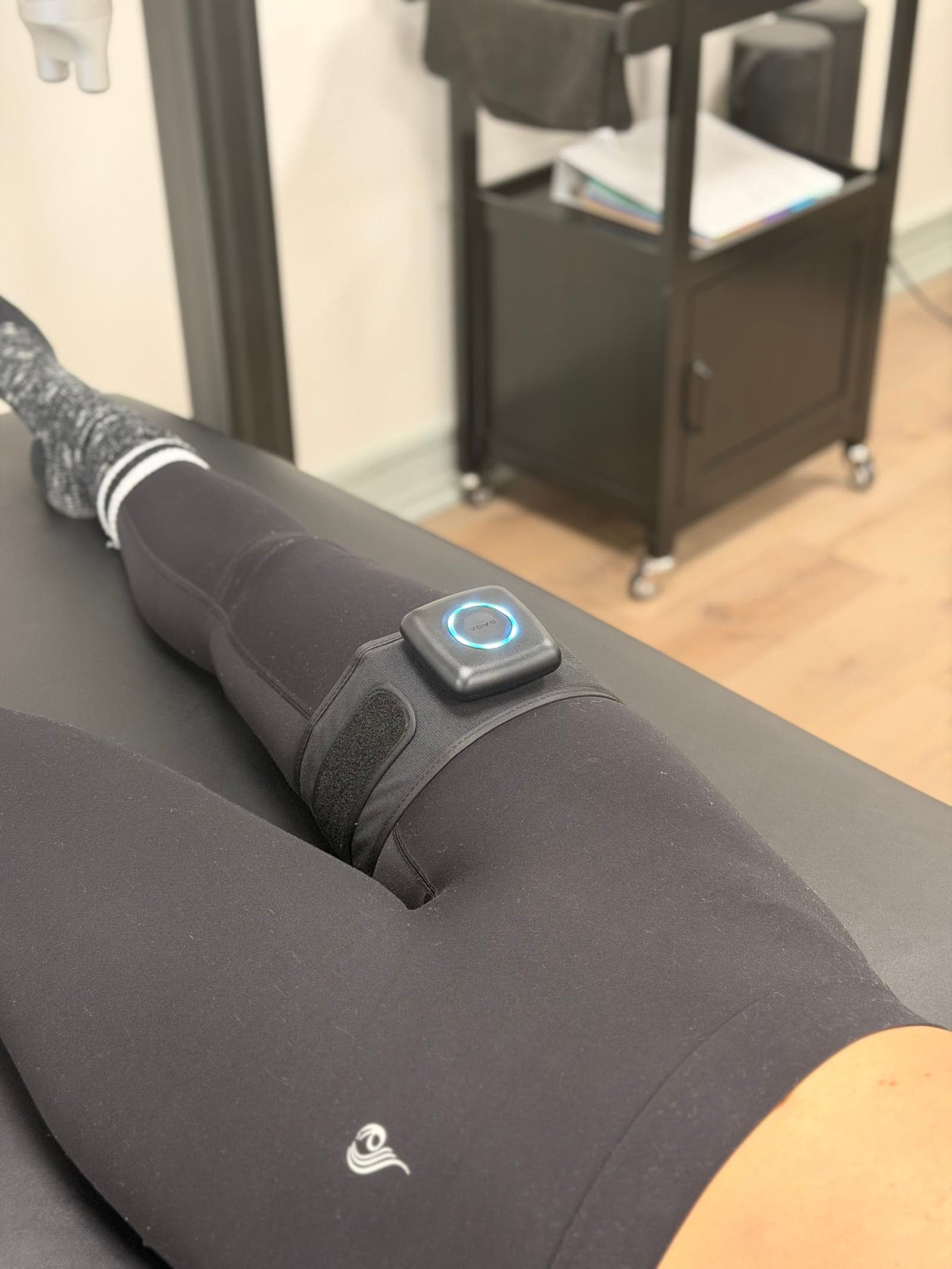
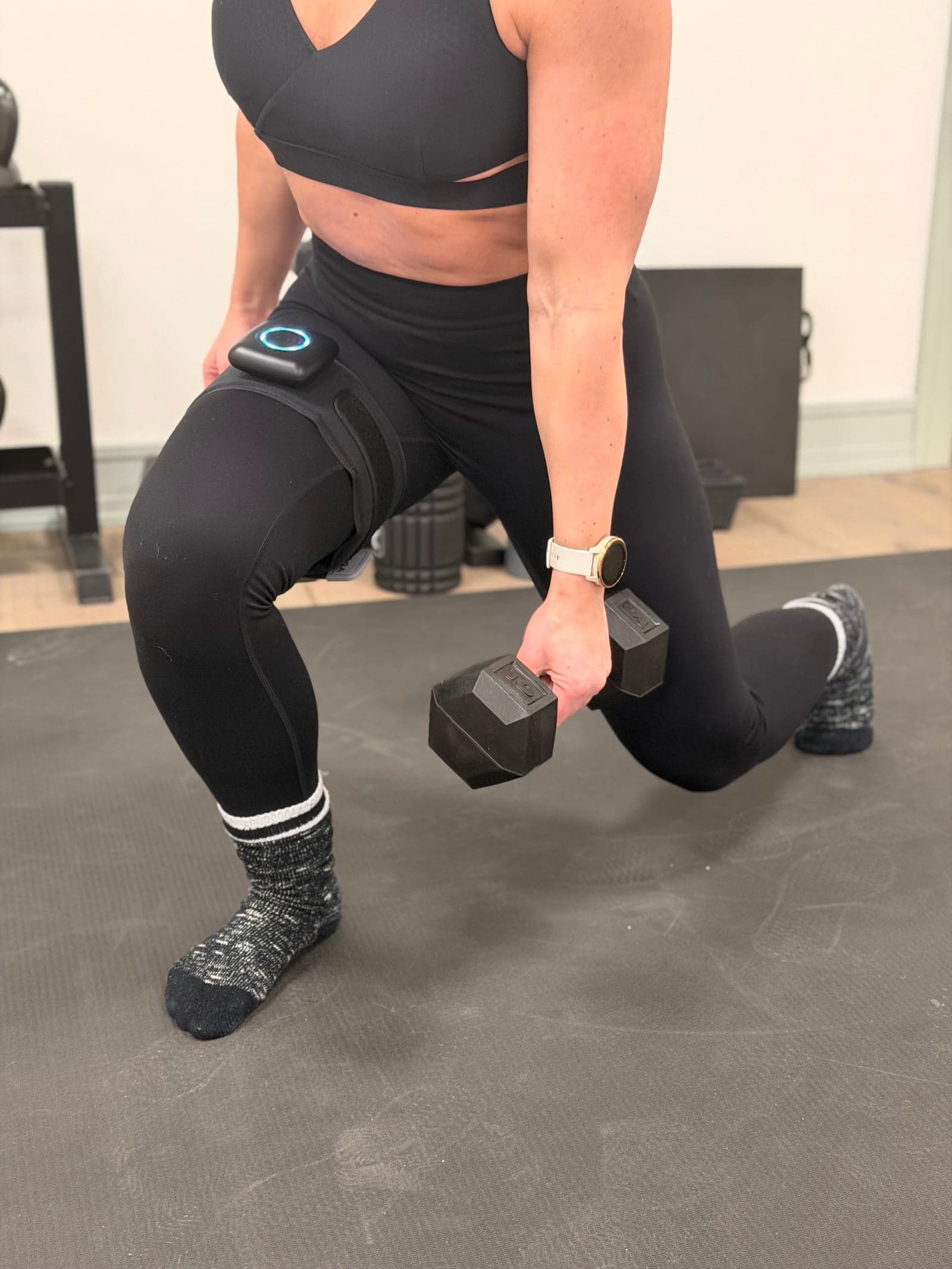
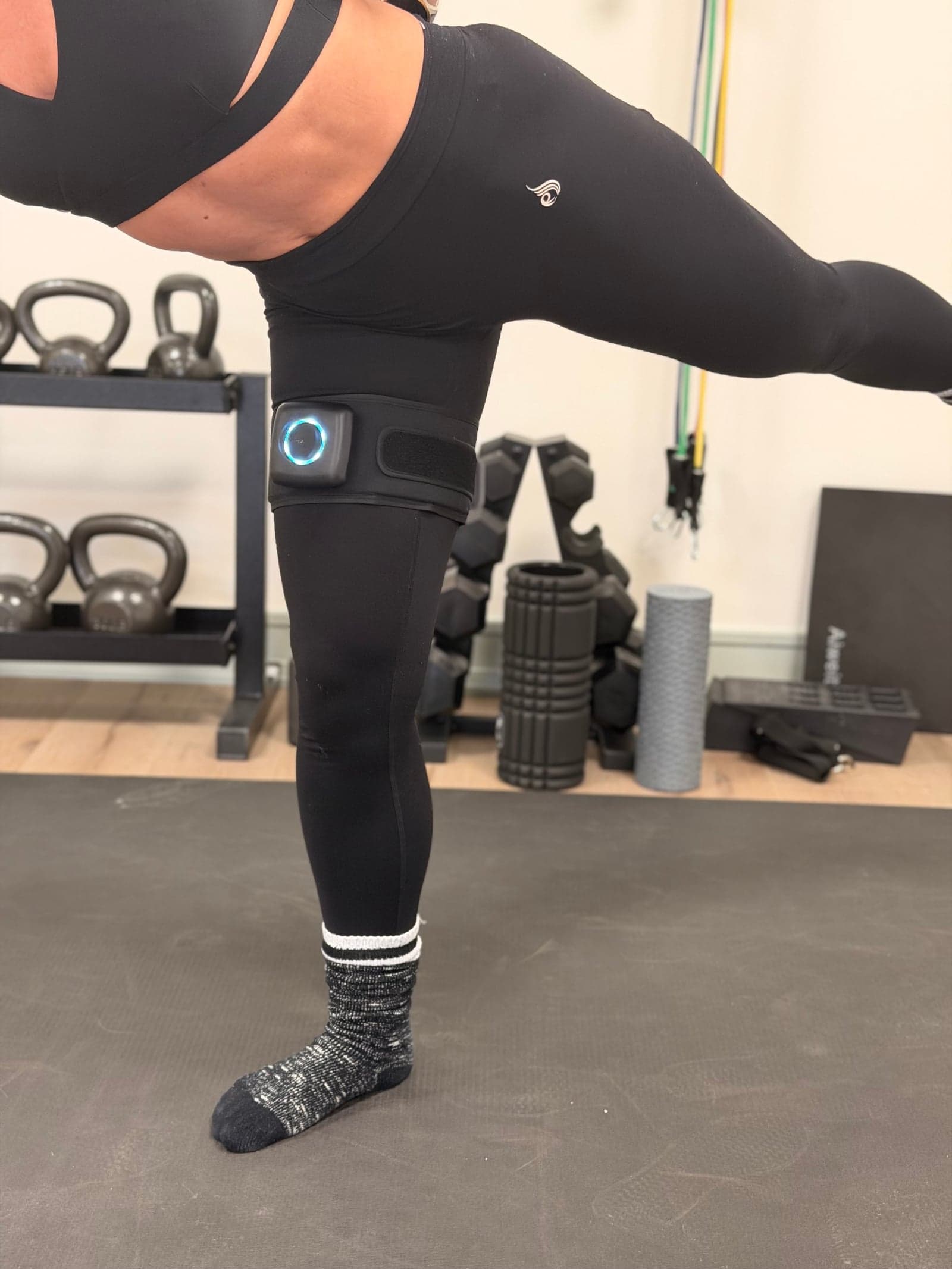
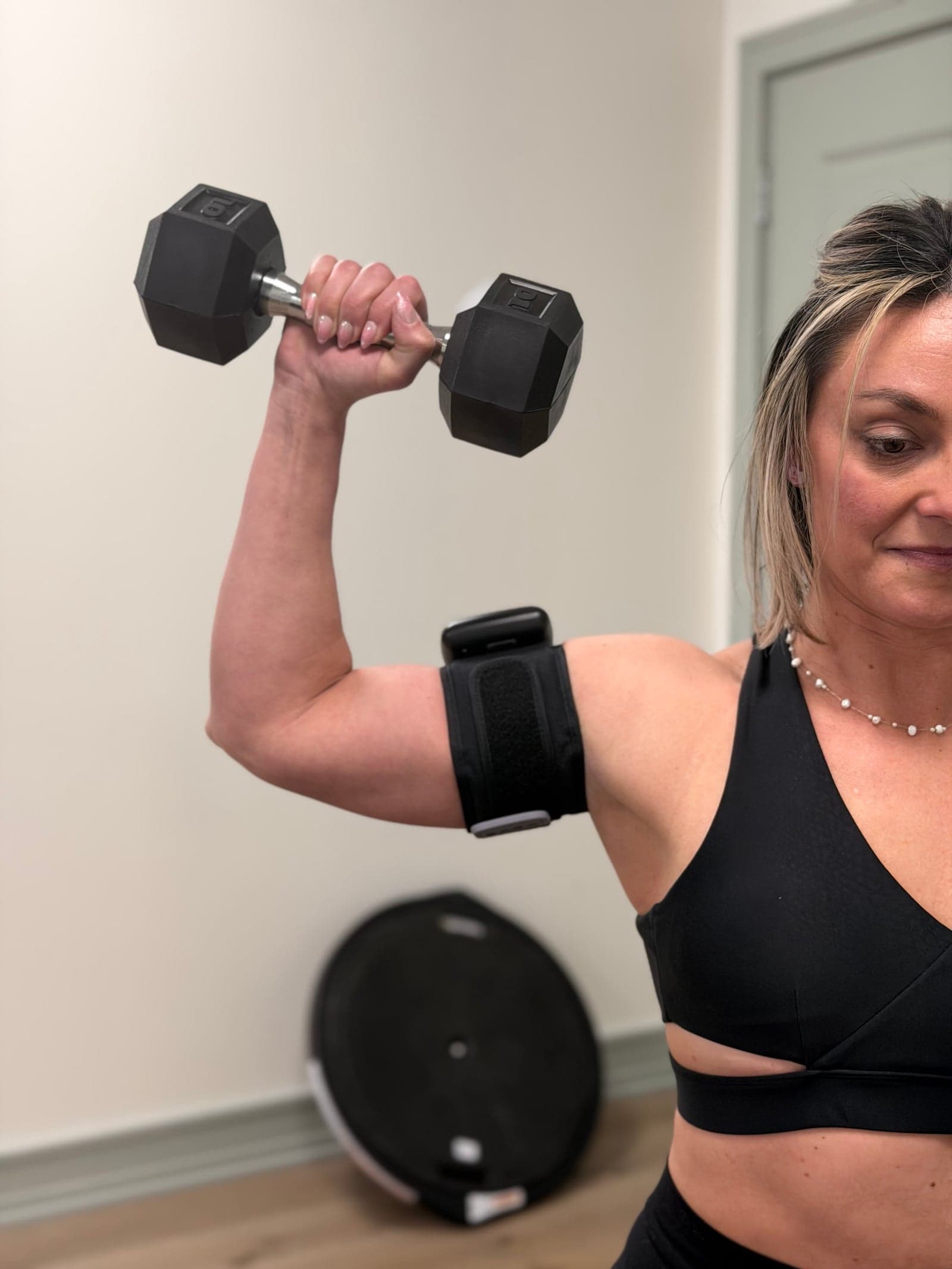
Blood flow restriction therapy uses a pneumatic cuff placed on the upper arm or upper leg to partially restrict venous return during light-load exercise. The working muscle below the cuff fatigues quickly and recruits the high-threshold motor units that normally only fire during heavy training. The result is a strength and muscle-building response at twenty to thirty percent of normal load.
For the patient, this means measurable strength work can happen when heavy load is not an option. Post-surgical patients who cannot load the repair yet. Injured athletes who cannot tolerate heavy training. Older adults who do not have the joints for high-load work. Anyone for whom the gap between rest and full loading would otherwise leave them deconditioned.
A typical BFR set takes about twenty minutes inside a longer treatment session. Your Doctor of Physical Therapy places the cuffs, calibrates the pressure to your specific limb, and runs three to four sets of an exercise chosen to match your kinetic chain plan.
Who BFR Helps at Thera Performance Lab
Across the patients we see in Lake Orion, BFR shows up most in four populations.
Post-surgical recovery. ACL repair, rotator cuff, labral repair, meniscus, Achilles, hip arthroscopy. Anywhere a recent surgery has left the surrounding muscle off-line for weeks. BFR lets strength training begin earlier than conventional rehab allows, so the post-surgical deconditioning curve does not extend the total recovery by months.
Injury rehabilitation. Knee, hip, shoulder, elbow, and ankle injuries where the affected segment cannot tolerate normal training load. BFR keeps the rest of the kinetic chain trained while the injured tissue heals, so the recovery does not finish with one weak link and a chain that has to be rebuilt around it.
Sports performance. Competitive athletes from across Oakland County who are managing chronic joints, deload weeks, or volume problems in season. Golfers from Oakhurst and Indianwood, runners off the Paint Creek and Polly Ann trail systems, jiu-jitsu and MMA athletes, weightlifters, and high school and collegiate athletes from the surrounding districts.
Active adults managing chronic load. Patients dealing with low-grade knee, hip, or shoulder issues where heavy training is no longer the right input. BFR provides the strength stimulus the body still needs without the joint stress the body can no longer tolerate.
In every case, the BFR work happens inside a Complete Kinetic Chain Assessment that establishes what is actually limiting the patient and what the full treatment plan should look like. BFR is one tool. The plan is the framework.
Why TPL Uses SAGA BFR Cuffs
The single largest variable in clinical BFR effectiveness and safety is pressure calibration. Older systems require the therapist to take a Doppler reading, manually inflate a pressure cuff, and hope the pressure holds through the set. That works in a research lab. It does not work in a clinical setting where the therapist's attention should be on the patient.
We use SAGA BFR Cuffs, engineered with input from Dr. Mike MacPherson, PhD, CSCS, a sport scientist who has spent his career on BFR research and applied performance science. The cuffs are wireless and auto-calibrating. They read the patient's limb size, compute the right occlusion percentage, hold it through the set, and log the data automatically.
For us in the clinic, that means the cuff comes off the shelf, goes on the patient, and is at the right pressure inside thirty seconds. The therapist runs the protocol. The equipment runs the calibration.
What a Visit Looks Like
The first visit is a $99 Complete Kinetic Chain Assessment. Sixty minutes, one-on-one with your Doctor of Physical Therapy. We map how your full body moves, identify the actual cause of pain, restriction, or limited mobility, and decide together what the treatment plan should look like.
If BFR is the right tool for your situation, it is added to the plan from there. Most BFR clients see weekly or twice-weekly sessions through the active rehab or training-recovery phase, with the rest of the treatment plan running alongside. Manual therapy. RX2600 robotic precision therapy. Dry needling where indicated. Progressive loading. The whole kinetic chain framework.
No referral required. Michigan is a direct-access state, so you can book without a physician's note. No insurance involvement. We are cash-pay only, with HSA and FSA accepted and a superbill provided for out-of-network reimbursement if your plan supports it.
How TPL Compares to "BFR at the Gym"
Two things to be clear about.
First, the cuff is not the intervention. The cuff is the equipment. The intervention is a clinician-administered protocol, calibrated to your specific limb and your specific kinetic chain, performed in a session where a Doctor of Physical Therapy is in the room. Self-administered BFR with generic protocols is a different intervention with a different risk profile and a different outcome.
Second, BFR is not a stand-alone treatment for most issues. It is a tool inside a broader plan. Patients who come in with shoulder pain and ask for BFR usually leave with a plan that includes BFR as one of three or four inputs, addressing both the local issue and the upstream causes in the chain. That is what a kinetic chain treatment plan is, and it is not something a gym BFR setup provides.
FAQs
Do I need a referral?
No. Michigan is a direct-access state. You can book a Complete Kinetic Chain Assessment without a doctor's referral, prior diagnosis, or pre-authorization.
How much does a BFR session cost?
Every first visit is the $99 Complete Kinetic Chain Assessment. Subsequent treatment sessions, including those with BFR, are billed on a flat session rate that your therapist will walk through during your first visit. We are cash-pay only, so there are no surprise insurance charges.
Can I just buy cuffs and skip the clinic?
Yes, SAGA BFR Cuffs are available consumer-direct. Many of our patients buy their own to continue clinical-protocol BFR at home between sessions. Whether that is the right approach for your situation depends on what brought you in. For post-surgical or acute-injury cases, clinical supervision matters early. For maintenance and home programming after the protocol has been established, consumer-direct cuffs work well.
How long does it take to feel results?
Strength and muscle outcomes from BFR typically begin showing measurable change within three to four weeks of consistent application, matched to the rest of a treatment plan that addresses the underlying kinetic chain issues. The actual timeline depends on what brought you in, your starting point, and your training history.
What if I already own SAGA cuffs?
Bring them in. Many TPL clients arrive already owning SAGA cuffs and want a clinical assessment to inform how they should be using them. Your Doctor of Physical Therapy will build a protocol matched to your kinetic chain and the issues you are working through.
Continue Your Training at Home
If you want to continue BFR training between sessions or after discharge, SAGA BFR Cuffs are the same cuffs we use in clinic. The at-home protocol can mirror the in-clinic version exactly. Use code THERA at saga.fitness for 10% off if you are a TPL client.
Book Your Assessment
If you are in Lake Orion, Clarkston, Oxford, Rochester Hills, Auburn Hills, Goodrich, or anywhere across northern Oakland County and you are looking for clinical-grade blood flow restriction therapy as part of a real treatment plan, this is what is available at Thera Performance Lab.
Book your $99 Complete Kinetic Chain Assessment and find out whether BFR is the right tool for your situation, what the full plan should look like, and how to get started.
Ready to find the root cause?
If you've been working through sports injuries and want a root-cause path forward, this is the work Thera Performance Lab does every day. Sessions run inside our Sports Performance & Recovery track, typically anchored by Blood Flow Restriction Training as one of the precision tools in a personalized kinetic-chain plan.
Book a Complete Kinetic Chain Assessment — $99, no referral needed.