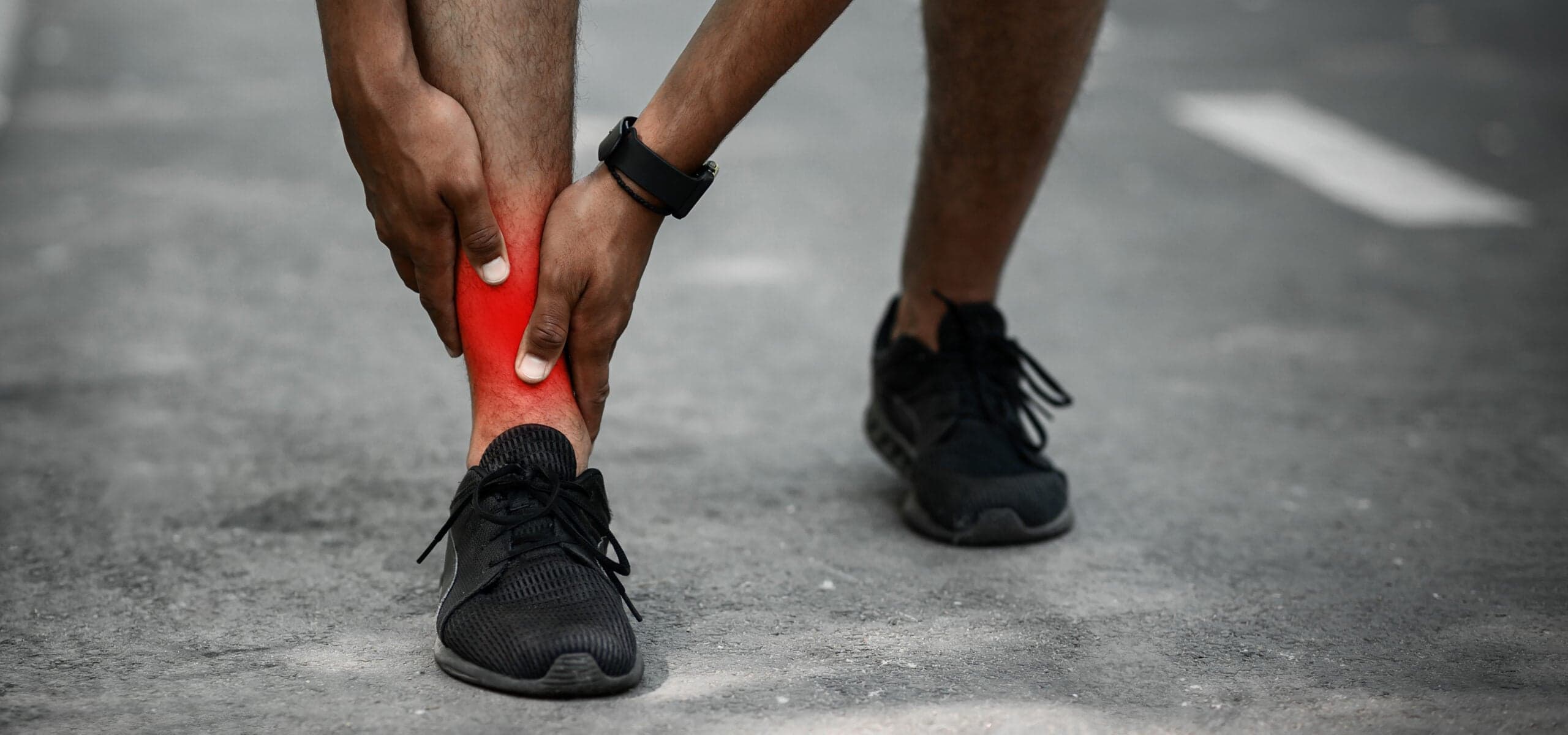
shin splints
Find Lasting Relief from Shin Splints in Lake Orion: A Root-Cause Guide
Recurring shin splints in runners and active adults are almost never a shin problem. A root-cause guide for active adults in Lake Orion who have iced, rested, and re-laced, and still hurt a mile in.
Start Feeling Better Today
Stop managing pain. Start hunting the cause.
$99 · No Referral Needed
The guide · 8
- 01The kinetic chain angle
- 02How we treat this one-on-one at Thera Performance Lab
- 03Shin Splints Causes
- 04Shin Splints Relief
- 05Pain Along the Front or Inside of the Shin During or After Running
- 06Tenderness When Pressing Along the Lower Two-Thirds of the Tibia
- 07Frequently asked questions
- 08Ready to find the root cause?
You typed it into your phone after another run cut short by the same ache: recurring shin splints treatment Lake Orion. You have iced the shin, swapped the shoes, added arch support, stretched the calves, and backed the mileage down, and still the pain along the front or inside of the shin shows up a mile or two in, every time you build the running back up. Here is what nobody tells the won't-slow-down crowd: the shin is rarely where the problem starts. The pain you feel along the tibia is the last report of a loading problem that lives further up the chain.
The kinetic chain angle
The pain shows up along the front or inner edge of the shin. It almost never starts there. The chart usually reads medial tibial stress syndrome, or MTSS, and the mechanism is real: impact load is exceeding what the bone, tendon, and muscle along the tibia can absorb. What the standard playbook skips is why the tibia is being asked to absorb that much in the first place. The lower leg is downstream of three patterns that sit higher up.
Foot pronation that overloads the posterior tibialis. When the arch collapses on stance, the posterior tibialis works overtime to control that collapse, and its insertion runs along the medial border of the tibia, exactly where the tenderness shows up. Rolling the foot and stretching the calf never change why the arch is folding.
Hip abductor weakness that shifts impact medially. The glute medius is supposed to hold the pelvis level on a single-leg stance, and every running stride is a single-leg landing. When the abductor does not hold, the opposite side of the pelvis drops, the stance leg rotates inward, the knee follows, the foot pronates, and the shin absorbs the rotation and impact the hip should have managed. Hip abductor strength is a consistent predictor of lower-leg overuse injury in the running research.
Stride cadence below 170 steps per minute. A slow cadence means a longer stride, and a longer stride means landing further out in front of your center of mass. That drives more braking force through the leg at heel strike and more time on the ground per step. Bumping cadence toward 175 to 180, even at the same pace, drops impact at heel strike substantially (Heiderscheit et al., PubMed). Most runners fighting this problem are running in the low 160s.
Address the upstream pattern and the shin stops being asked to absorb load it was never built for.
How we treat this one-on-one at Thera Performance Lab
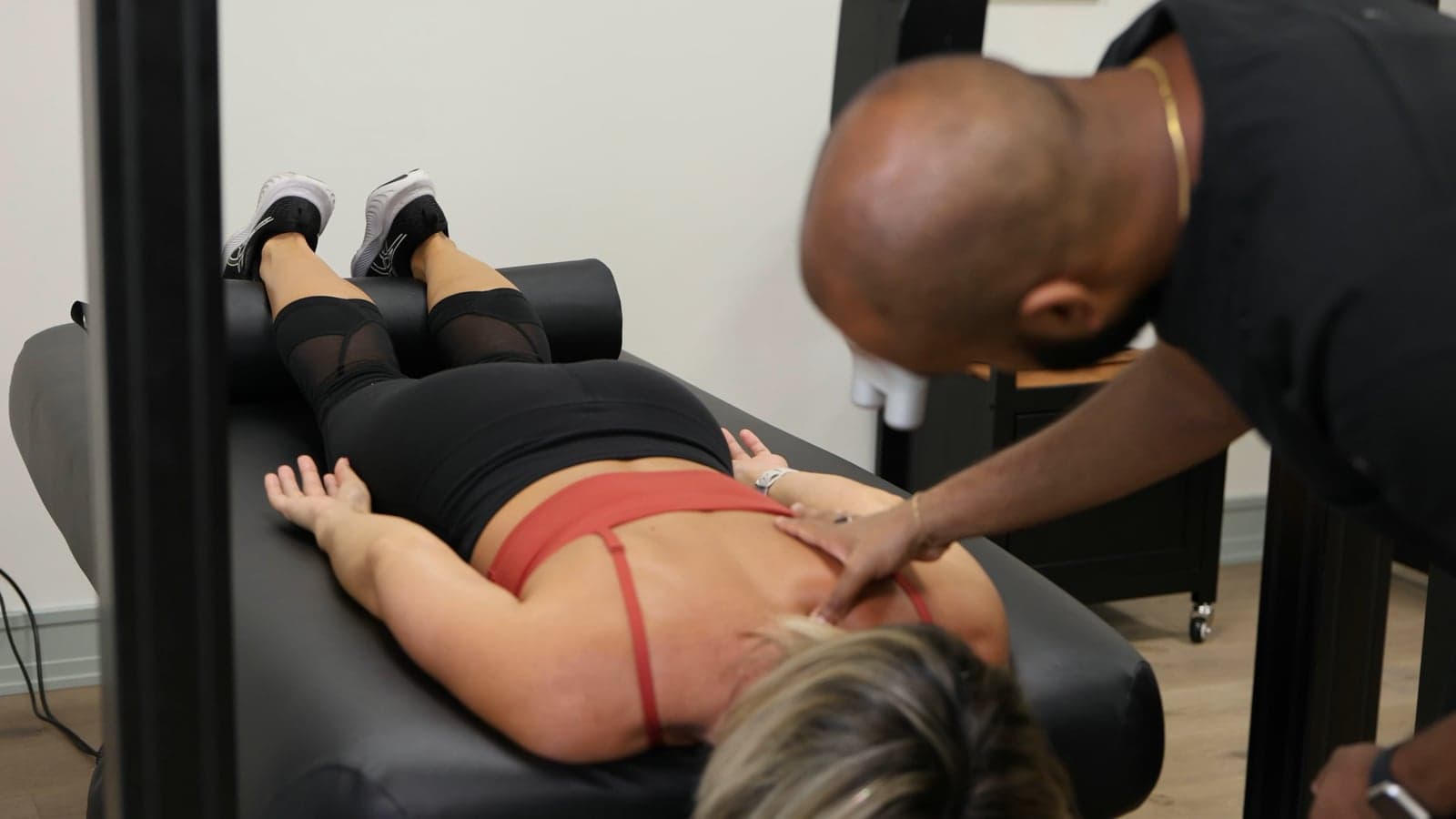
Every plan at TPL starts with the Complete Kinetic Chain Assessment: one hour, one-on-one with Dr. Mani, our Doctor of Physical Therapy. He does not press on the sore spot and hand you a calf-stretch sheet. He maps the whole chain from the ground up: ankle dorsiflexion under load, how the arch behaves on stance, posterior tibialis tone along the medial tibia, hip abductor strength and pelvic control through gait, and your running cadence, stride length, and heel-strike pattern. By the end of the hour you know which links are driving the load, not just where it hurts. Our shin-pain condition guide breaks that chain down link by link.
From there we build the plan around what your chain is actually doing, not a diagnosis code. We work outside the insurance model, so sessions run as long as the work requires: cash-pay, with HSA and FSA accepted. Treatment usually pairs hands-on manual therapy at the posterior tibialis, soleus, and ankle joint to restore the tissue quality and dorsiflexion the lower leg needs, with the strength and gait retraining that change how load travels through the chain. That two-part approach, calm the tissue and reset the chain, is what our Pain Relief & Mobility track is built around.
Shin Splints Causes
Ask what causes the problem and most answers stop at the lower leg: tight calves, flat arches, worn shoes, too many miles. Those matter, and the Mayo Clinic overview covers them well, but they are downstream of a loading problem, not the root. The causes that keep it coming back live up the chain.
Lost ankle dorsiflexion is one driver. When the ankle cannot bend far enough for the shin to travel forward over the foot, the arch collapses and the posterior tibialis pulls hard at its medial insertion at the worst moment of every step. A hip that cannot stabilize lets the knee and foot dive inward, loading the inside of the tibia from above. A calf and soleus shortened from years of compensation pull on the ankle and limit the motion further. And a cadence stuck in the 160s adds to the impact the leg has to swallow at every heel strike. None of that shows up when you only look at the shin. It shows up when someone watches how your whole leg meets the ground.
Shin Splints Relief
Real relief comes in two layers, and most people only ever get the first. Layer one calms the angry tissue: hands-on work along the posterior tibialis and the medial tibial border, plus the ankle and calf restrictions that limit dorsiflexion, often enough to change how the leg feels in a single session. This is the layer ice, rest, and new shoes are chasing. Real, but temporary on its own.
Layer two is the one that makes it last: changing the upstream inputs that decide how much load the tibia absorbs at all. Restore the dorsiflexion the ankle needs to roll through a stride. Rebuild the hip abductor strength that keeps the pelvis level and the knee from collapsing. Reset the cadence so the foot lands under your hip instead of out in front of it. When those inputs change, the lower leg stops absorbing force it was not built for, and the relief holds because the cause is gone, not just quieted.
Pain Along the Front or Inside of the Shin During or After Running
Pain along the front or inside of the shin during or after running is the most recognizable sign of the pattern, and the most misread. Pain along the front of the shin often points to the anterior compartment and the muscles that lift the foot. Pain along the inside points to the posterior tibialis and its medial insertion. Either way, the tissue is being overloaded by how the leg meets the ground, not by a flaw in the tissue itself.
People read the early-run version as something they can warm up through. Sometimes the ache does fade a few minutes in, then returns harder afterward or the next morning. That on-off pattern is a tell: tissue that is overloaded and reactive, not structurally broken, which responds fast once you take the overload away. If the pain builds the longer you run and lingers after you stop, the problem is not that you run too much. It is how the chain loads when you do.
Tenderness When Pressing Along the Lower Two-Thirds of the Tibia
Tenderness when pressing along the lower two-thirds of the tibia is the finding that separates this pattern from a simple muscle strain. Run a thumb along the inner edge of the bone in that lower stretch and it is sore, sometimes for several inches. That diffuse, spread-out tenderness is the signature of medial tibial stress syndrome: the tissue and bone along the tendon's insertion reacting to repeated overload.
One caution worth taking seriously. If the soreness narrows to a single sharp point on the bone rather than a spread-out band, that can point to a stress fracture, which needs imaging before any return to running. Part of what the assessment sorts out is which one you are dealing with, so the plan is built on the right answer instead of a guess.
Frequently asked questions
Why does the shin pain keep coming back every time I ramp up mileage?
Because rest and ice treat the tissue, and the tissue is not the cause. If a pronating foot, a weak hip, or a slow cadence keeps overloading the tibia every stride, the pain quiets during the time off and returns the moment the load comes back. Until the upstream mechanics change, the shin keeps paying the bill. That is why a local approach stalls and a kinetic-chain approach holds.
Do I need a referral or insurance to be seen in Lake Orion?
No referral, no insurance hoops. TPL works outside the insurance model, so you book directly and we spend the full hour on you. It is cash-pay, with HSA and FSA accepted, and we provide receipts if you want to pursue out-of-network reimbursement. Most people start with the $99 Complete Kinetic Chain Assessment and decide from there.
Will new shoes or orthotics fix it?
They can help by shifting load under the arch, which buys short-term relief. What they do not do is change why your foot, hip, or stride is loading the tibia wrong in the first place. Most people get further pairing smart footwear with kinetic-chain treatment than with orthotics alone. If the hip strength and the cadence never change, the lower leg gets overloaded again the next time the mileage climbs.
Ready to find the root cause?
If the shin pain will not quit in Lake Orion no matter how many rest weeks, shoe swaps, and calf stretches you have tried, the Complete Kinetic Chain Assessment is the right next step. One hour, one-on-one with a Doctor of Physical Therapy, full-body. We don't treat where it hurts. We hunt what's causing it.
Book your $99 Complete Kinetic Chain Assessment, no referral needed. We're in Lake Orion, MI, serving active adults who refuse to slow down.
Book your $99 assessment or get in touch with a question first.